

What Sports Mechanics Can Teach Us About Clinical Ergonomics

ErgoPractice News – March/April 2026
By Jin Chang PhD
jchang@surgitel.com
Summary
Across many sports, the most efficient and powerful movements occur when the hands stay close to the body’s core. Baseball batters generate force by keeping their hands tight to their core during the swing, while golfers maintain control and leverage through a connected, compact motion. In sports like tennis, boxing, hockey, weightlifting, and rowing, this same biomechanical principle appears consistently; power and precision are greatest when the hands remain close to the body rather than extended outward.
Although these activities involve different movements, they all reinforce a shared concept: optimal power, control, and accuracy are achieved when the hands operate near the body’s core. This same principle extends directly to clinical ergonomics.
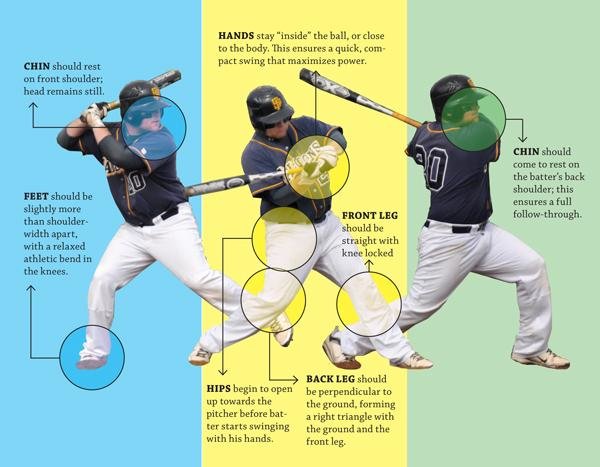
Effective Baseball Swing1
Why Hand Positioning Matters in Clinical Practice
When clinicians work with their hands positioned far away from their body, several things happen:
- Shoulder and neck muscles must work harder to stabilize the arms
- Posture often deteriorates
- Fine motor control becomes less precise
- Fatigue increases over time
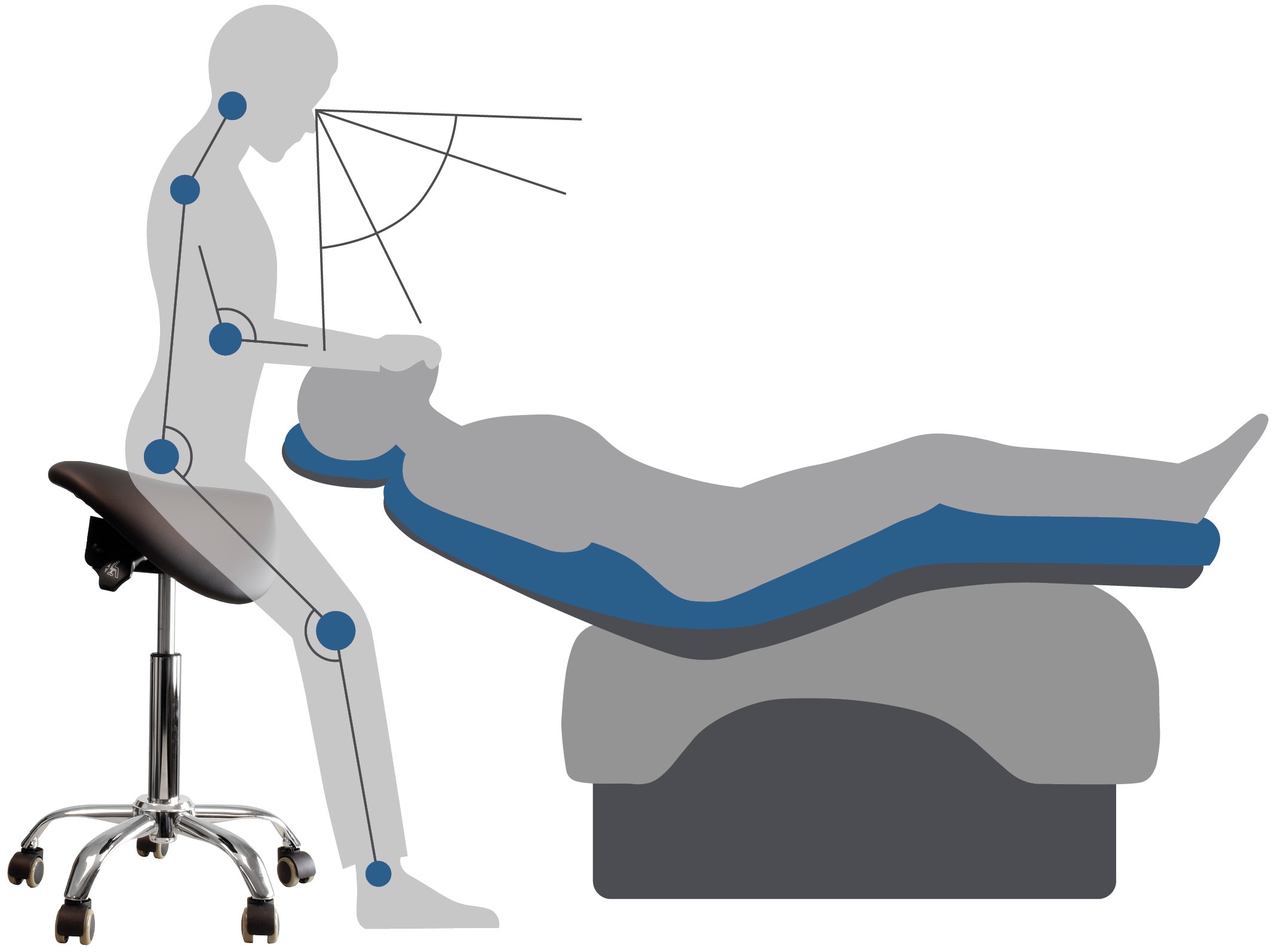 However, when the hands remain closer to the core, the body gains several advantages:
- Greater stability through the torso
- Better ability to control instruments through improved leverage
- Reduced strain on the shoulders and neck
- Increased endurance during long procedures
This compact working posture allows clinicians to rely on the body’s natural biomechanics rather than overloading smaller muscle groups.
The Role of Proper Loupe Design
Achieving this ideal working position depends heavily on the optical system a clinician uses.
Two critical factors determine whether your posture supports a compact, ergonomically efficient working position:
- Declination Angle
Declination angle determines how far downward your eyes can comfortably look while keeping your head upright. If the declination angle is too shallow, clinicians often compensate by:- Leaning forward
- Dropping their head
- Bringing their shoulders forward in a hunched position
Over time, these compensations can contribute to neck and back fatigue.
A properly designed declination angle allows clinicians to maintain a neutral head position while keeping their hands closer to the body.
- Working Distance
Working distance determines where the optics are focused relative to your body. If the working distance is too long, clinicians must extend their arms farther away, reducing leverage and stability. Conversely, if the working distance is too short, clinicians may be forced to elevate their hands higher than a natural resting position, increasing strain on the shoulder muscles and upper back. When properly calibrated, the optics allow clinicians to operate at their natural, ergonomic hand position close to the body’s center of mass.
Precision Through Stability
Fine motor control depends heavily on stability and leverage.
Think of a surgeon or hygienist performing delicate work: millimeter-level accuracy often matters. By positioning the hands closer to the body’s core, clinicians create a more stable biomechanical platform for instrument control.
This results in:
- Improved precision
- Better visibility within the working field
- Less muscle fatigue during long procedures
Ergonomics Is More Than Sitting Up Straight
Clinical ergonomics is often discussed in terms of reducing discomfort or preventing musculoskeletal disorders. But the benefits extend beyond injury prevention.
Just like athletes rely on proper mechanics to perform at their best, clinicians benefit from working within their body’s natural biomechanical strengths.
Proper loupe design with an optimized declination angle and personalized working distance helps clinicians operate in a compact, balanced posture that improves both comfort and performance.
Bringing the Concept Full Circle
Athletes understand the importance of keeping their hands connected to their body’s core. It maximizes power, efficiency, and control. In clinical practice, the same principle applies.
By supporting a compact working posture, properly designed loupes help clinicians operate in a position that promotes stability, precision, and long-term musculoskeletal health.
References
- Murphy, Colin. “Breaking Down The Effective Baseball Swing.” Severna Park Voice, November 9, 2018. https://www.severnaparkvoice.com/stories/breaking-down-the-effective-baseball-swing,24459.